Potty Talk: The Real Scoop on Poop

Kim Flores • November 8, 2024

Your feces can reveal a surprising amount about your overall health, acting as a daily check-up on how your body is functioning.


From color and consistency to frequency, each aspect provides clues about your diet, digestion, and potential health issues. Paying attention to these details can help you spot early signs of imbalance and make informed choices for your well-being.
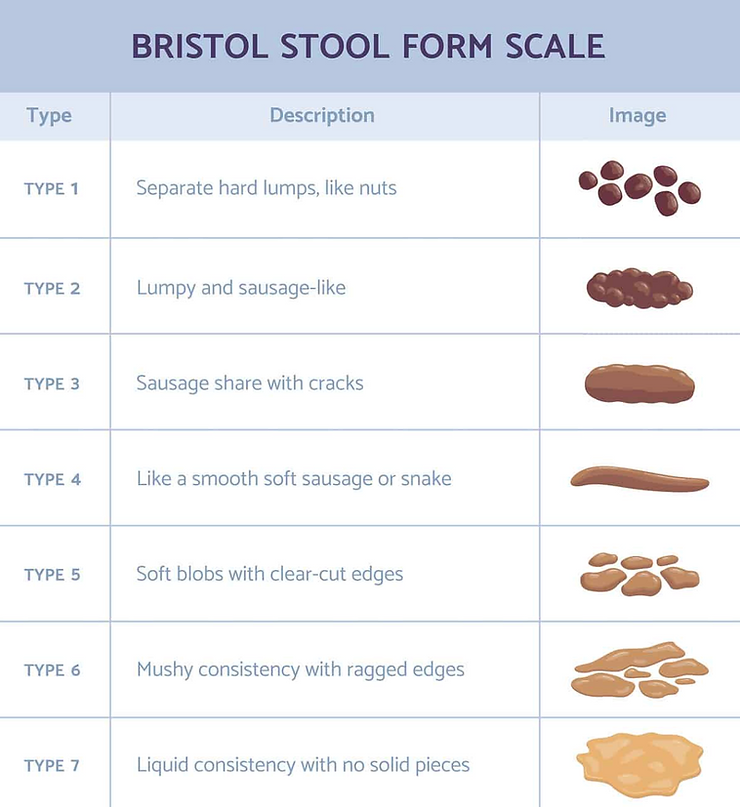
Illustration of the Bristol Stool Form Scale, showing seven stool types with descriptions

First, lets take a look at what some of the main indicators are of healthy stool:


Color

Healthy stool is typically going to be brown due to the presence of bile, which is produced in the liver. Variations in brown can occur, but other colors might indicate issues (e.g., black or tarry stools could indicate bleeding in the upper gastrointestinal tract, while white or clay-colored stools might suggest a bile duct obstruction).

Consistency

The ideal stool consistency is similar to that of a banana: soft and formed but not too hard or too loose. The Bristol Stool Chart (shown above) categorizes stool into seven types, with Type 3 (like a sausage but with cracks on its surface) and Type 4 (like a sausage or snake, smooth and soft) being the most typical for healthy individuals.

Illustration of the Bristol Stool Form Scale, showing seven stool types with descriptions

First, lets take a look at what some of the main indicators are of healthy stool:


Color

Healthy stool is typically going to be brown due to the presence of bile, which is produced in the liver. Variations in brown can occur, but other colors might indicate issues (e.g., black or tarry stools could indicate bleeding in the upper gastrointestinal tract, while white or clay-colored stools might suggest a bile duct obstruction).

Consistency

The ideal stool consistency is similar to that of a banana: soft and formed but not too hard or too loose. The Bristol Stool Chart (shown above) categorizes stool into seven types, with Type 3 (like a sausage but with cracks on its surface) and Type 4 (like a sausage or snake, smooth and soft) being the most typical for healthy individuals.

Shape

Healthy stools are generally log-shaped and passed in one piece or a few smaller pieces. Pellet-like stools can indicate constipation, while very loose or watery stools can indicate diarrhea.


Frequency

A healthy bowel movement can vary widely among individuals. Typically, anywhere from three times a day to three times a week is considered normal, as long as the individual does not experience discomfort. It is important for everyone to know what their baseline frequency is.


Ease of Passage

Healthy stools should be passed without straining, pain, or discomfort.


Smell

While stool naturally has an unpleasant odor, particularly foul-smelling stools might indicate malabsorption or an infection.


Content

Visible mucus in stool might indicate inflammation of the intestines. Blood in stool, whether bright red or dark and tarry, should be promptly evaluated by a healthcare provider. If there is visible undigested food (aside from certain foods like corn that do not break down) this could be a clue that the intestines are not breaking down and absorbing food appropriately.


"People say love is the best feeling. But I think finding a toilet when you have diarrhea is better."


Don't forget to check your stool!


Your bowel movements can give you so much insight to your health so don't be afraid to look! If you find yourself with any of the abnormal signs that we discussed, be sure to check in with your healthcare provider.


Cosmetologist applying eyebrow treatment to a relaxed client in a clinic setting
By Monica McKitterick May 29, 2026
Why are Cedar Park women starting at a Botox clinic in Cedar Park in their 30s? We explain preventive Botox, who it is for & what results to expect.
Cosmetician applying brow treatment to a woman with closed eyes using gloved hands
By Monica McKitterick May 26, 2026
New to Botox? Get answers about Botox Cedar Park, TX, including how often you need it, what to expect, and if it is worth it for first-time patients.
Hands drawing medicine from a vial into a syringe on a white background
By Monica McKitterick May 22, 2026
Curious about a B12 injection in Cedar Park, TX? Learn who benefits most, what results feel like, and how to get started at Impact Family Wellness.
Doctor checking a patient’s blood pressure in a clinic with a cuff on the arm
By Monica McKitterick May 18, 2026
Urgent care Cedar Park TX residents trust: learn when to go, what gets treated, and how to skip a big emergency room bill at Impact Family Wellness.
Doctor examining a patient with a stethoscope in a bright clinic
By Monica McKitterick May 15, 2026
Struggling with weight despite dieting? Obesity treatment Cedar Park, TX at Impact Family Wellness delivers provider-led support that changes results.
Person pinching abdominal fat with a hand in a black wristband and shorts
By Monica McKitterick May 13, 2026
Curious about semaglutide Cedar Park, TX patients are using it for GLP-1 weight loss? Hear real results and find out if you qualify at Impact Family Wellness.
Doctor measuring a patient’s waist with a tape in a bright clinic room
By Monica McKitterick May 11, 2026
Wondering if prescription weight loss in Texas is right for you? A Cedar Park provider explains who qualifies, the medication options, and how to start.
Nurse Practitioner stretching a patient's leg in at sports physical
By Monica McKitterick May 8, 2026
Get a sports physical Cedar Park, TX , that student athletes trust. See what is checked, what to bring, and how to book same-day at Impact Family Wellness.
Two women chatting at a reception desk in a bright office lobby with a laptop open between them
By Monica McKitterick May 4, 2026
From minor injuries to infections, a same-day appointment at Cedar Park patients trust means fast, personalized care without the long ER wait or bill
Nurse checking an older patient’s arm in a bright home setting
By No Author May 2, 2026
Struggling with ongoing symptoms? Learn 5 signs your chronic disease management Cedar Park plan may not be working, and what to do next.